
The Widest Part of the Bend
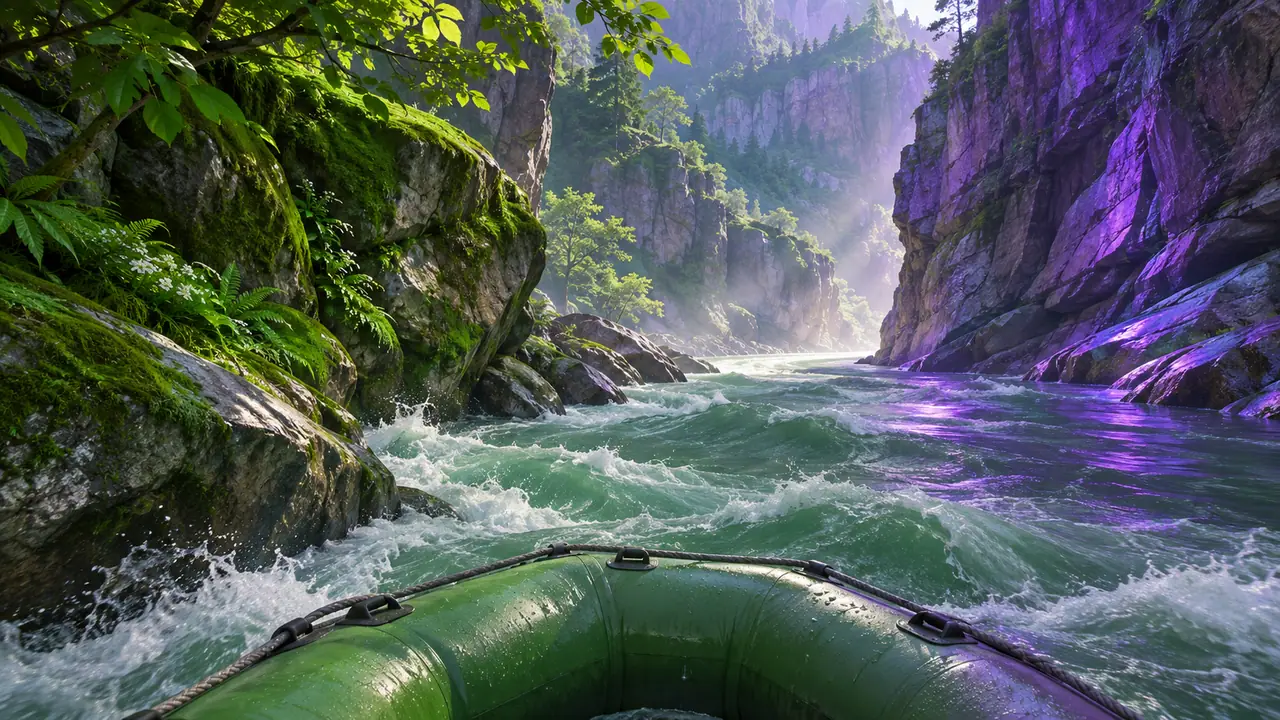
The earlier version of the canyon kept the best view of the inside corridor until after the raft reached the main turn. Before that point a person could see a broad reflection on the close wall and a streak of foam leaning toward the center of the water. There was little evidence of what remained open beyond the turn. The level sketch moved part of the upper ledge and gave the guide an earlier reference. The idea is to make a late discovery become an observation the player can use before choosing the last part of the line.
Find one early part of the route
The approach begins at a low change in the stone across the water. It is hardly visible beside the first row of rocks and is well above the water. Some narrow green growth follows the line until the wall begins to curve. From the center line of the reach, look under the edge of the ledge. The inside opening becomes visible a little before you expect to see the main bend. You can follow that small portion to an area with steadier light. In our illustration, the first pale patch of water takes the player in the same direction as the opening. If the edge of the distant view is hidden, the pale patch alone can still be compared with the route indicated by the wall.
Balance knowing with waiting
When the guide makes an early turn, inspect the main channel again. Its nearer foam may spread across the view. If you follow it farther into the river you give up some space that could be used later to line up beside the inside shelf. We keep one darker point at the top of the visible wall so the comparison can survive the change of direction. It will move against your view more slowly than the water closer to the raft. The guide can judge how much of the remaining distance is needed for a second, smaller motion. Take that move in the game only after considering why the earlier cue still made sense.
Repeat with an earlier viewpoint
An observation from an elevated shelf can show the opening before the raft sets out. That extra height is available at one place in the proposed reach. You can compare the first position with the view at the edge of the raft and see why the opening moves along the wall. The choice we want to study is whether someone can use a partial view before they know the full route from above. In one version the guide starts near the opposite wall and sees a small stone arch before the brighter green rock. Both parts need to remain identifiable after the first current takes the raft into the bend.
Give the line somewhere to go
Before the Standing Wave uses the wide part of the bend as the last place to change line before the shoulder fills the view. Reading the Wave at an Angle describes the earlier comparison that establishes where to look for that shoulder. The next variant will move the second wall closer to the edge of the observed route. We plan to check if the first visible part of the bend still gives the player enough information to choose. If it does, the rest of the whitewater can stay partly hidden without making the approach feel arbitrary. The route ought to look like a place you have started reading before you get there.
The log keeps the earlier and later angles beside the same section drawing. That comparison lets the guide describe one particular sightline instead of relying on a general impression of how much the canyon changed.