
River Reaches
The canyon is split into two game reaches, with different starts and different reasons to watch the nearest rock. Travel down the sections to compare the resting position, the water you can already read, and the next useful evidence. The first section handles a single unmistakable obstacle. The second begins with a smaller feature and continues through a series of playable pockets. A guide who reads the boards at the bank can recognize that difference before starting either proposed run.
The approach reach
In Before the Standing Wave, you can begin reading an upper channel from a broad strip of smooth water. A narrow rock divides the strip and carries a pale mark that stays put as whitewater flows around it. Beyond that rock one wave appears first. It is the one whose shoulder you can see early enough to make a prediction. From the center of the reach, the wave’s far edge appears higher because of the turn in the view. The guide can steer early and keep that pale line visible beside a dark part of the wall. This section ends with two different possible approaches to the same wave.
The pocket reach
In Cutwater Ladder, the pocket you enter is connected to the next by a short stretch of moving water. From the first pocket you can inspect both exits. One has a long white seam, and the other passes very close to a protruding slab. A familiar crest farther out in the run provides a place to check whether the boat is turning before it gets close to the second bank. The course can continue if you pass up the first gap. A short lower pool leaves room to reconsider the next move, especially if the turning stroke started later than the guide expected. This run lets you compare how the river reads on the way out with how it reads from the shelter you were trying to reach.
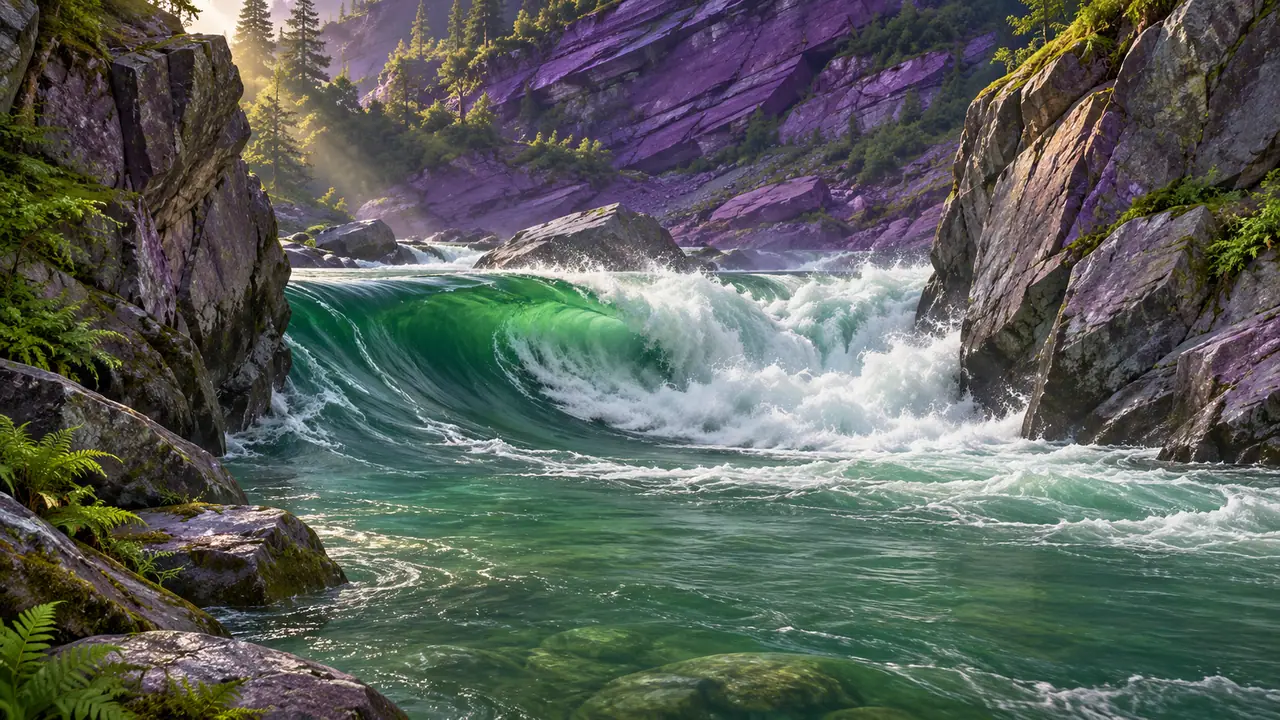
Before the Standing Wave
Long approach, one early sightline, and two ways to line up with the visible shoulder.
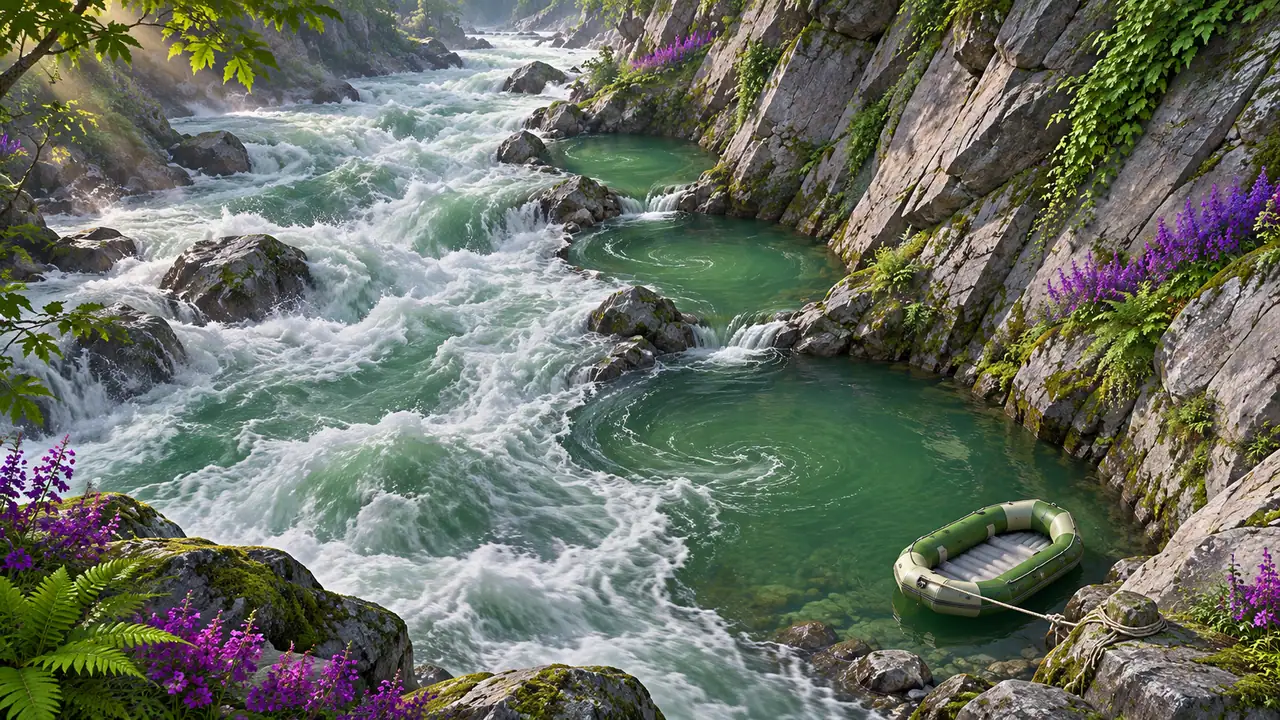
Cutwater Ladder
Three sheltered pockets stay connected through two short sections of moving water.